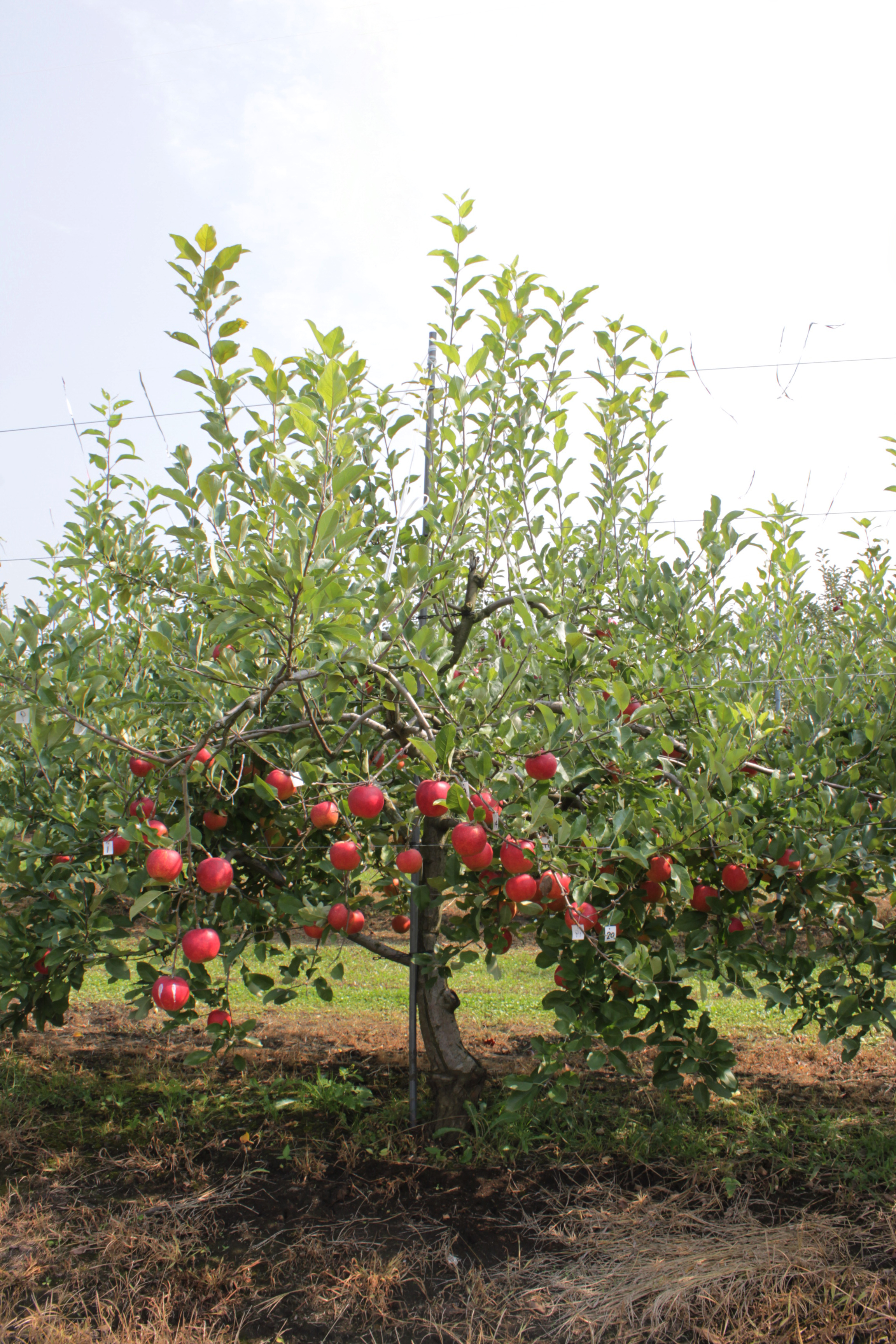

Today’s apples look quite artificial. They are bigger, more uniform in size and shape, more colorful and sometimes extremely sweet. Their red color is strong and their appearance is quite perfect.
For a long time I have been thinking that the apples we eat today must have changed over the years. I thought that somehow we designed and engineered the apple itself and I was surprised to discover this is not the case. The truth is that we changed the factory, and as a result the product changed.
I discovered that the apple tree is the object of design rather than the apple. The apple ‘factory’ (the tree) is designed to provide the product (the apple) better conditions to grow so we end up with a better outcome, from an economic point of view and from an aesthetics point of view.
We designed the tree to enhance the color of the apples, to make them redder and more appealing by reducing the amount of the wood, branches and leaves. We found ways of taming and training the tree in order to increase the amount of the products; apples.
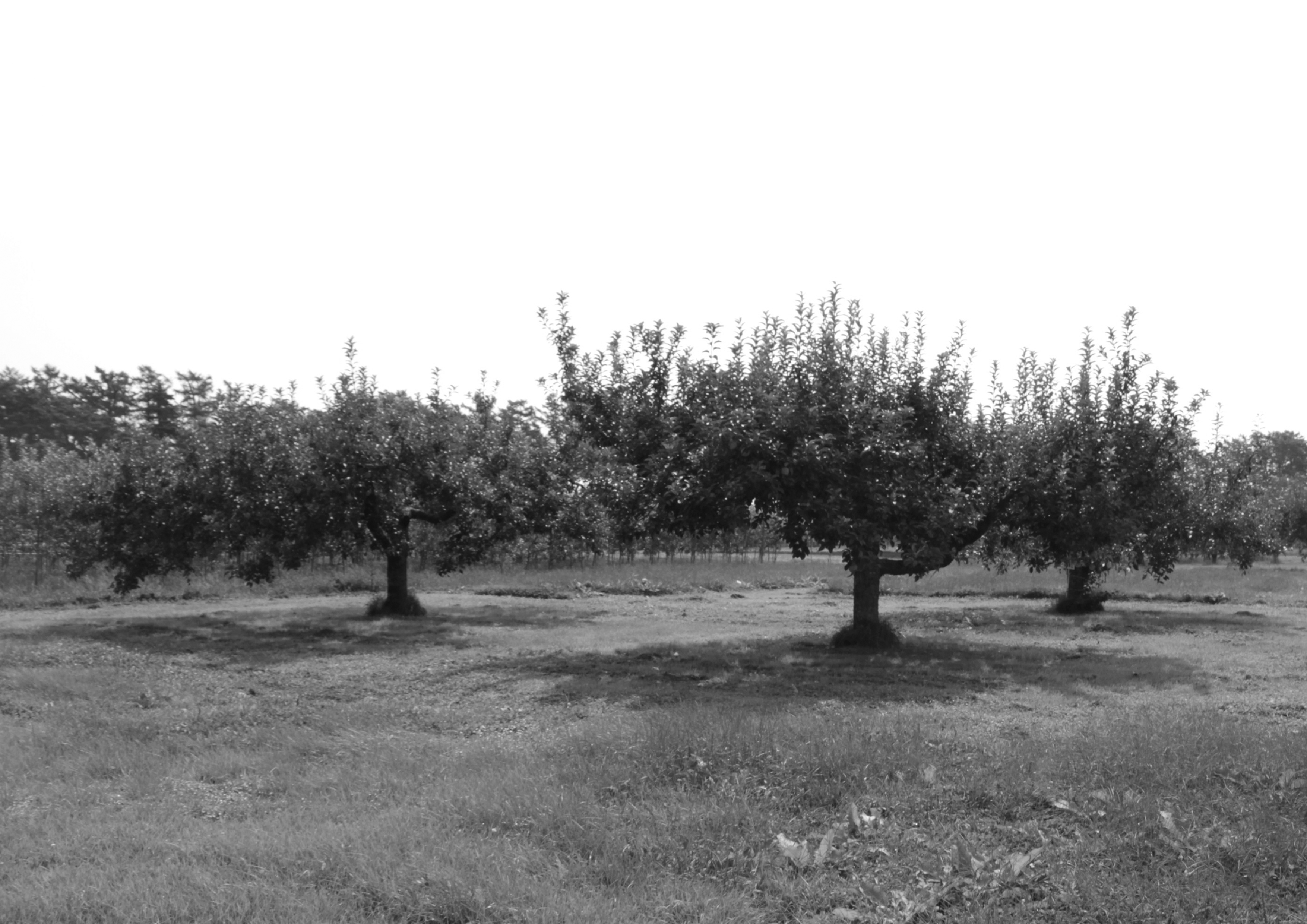
Apple trees grafted on invigorating rootstocks (29-year-old) in the Apple Research Station in NARO institute of Fruit Tree Science, Morioka, Iwate, Japan
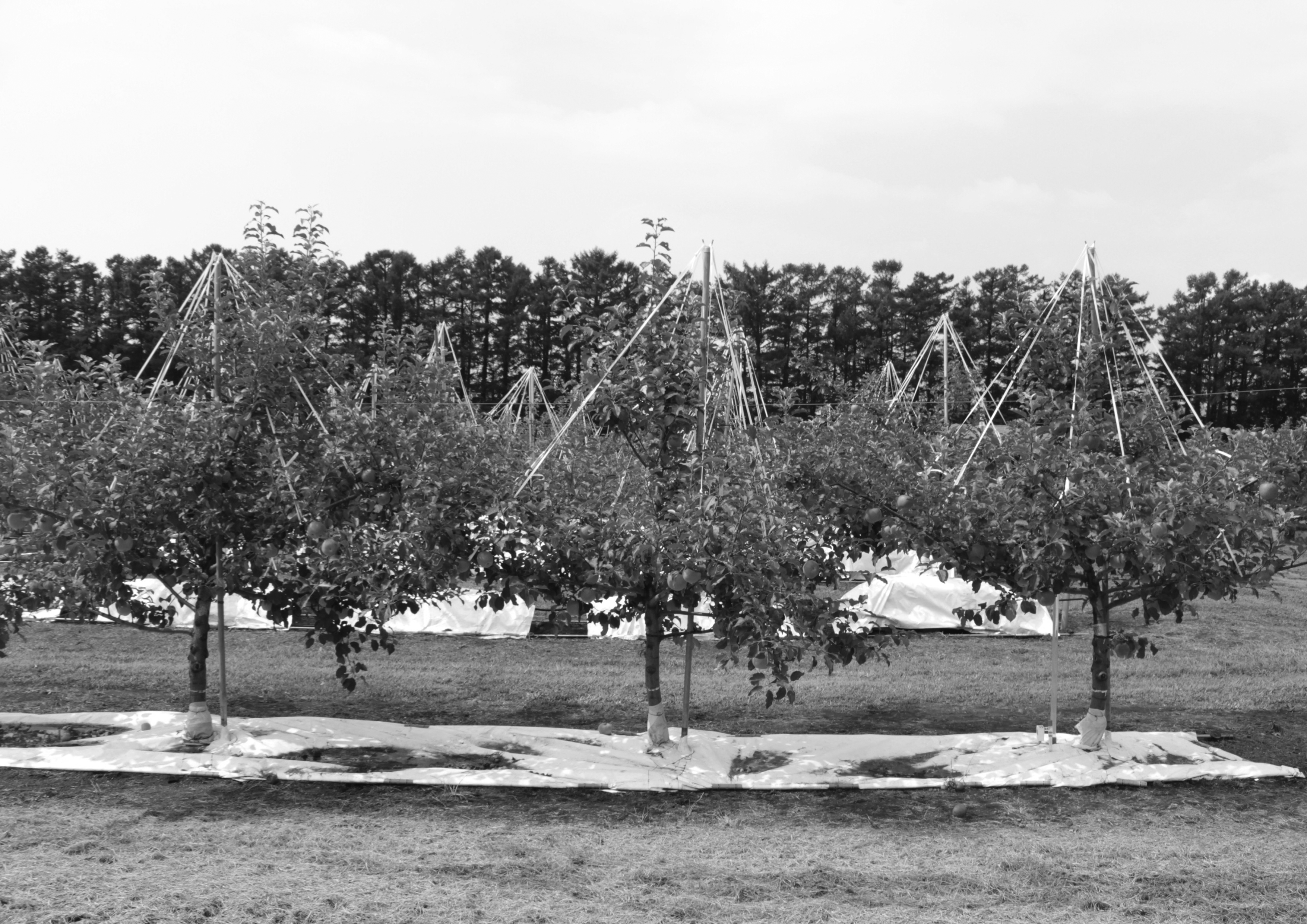
Apple trees grafted on dwarfing rootstocks (6-year-old) in the Apple Research Station in NARO institute of Fruit Tree Science, Morioka, Iwate, Japan
In addition, the tree’s size is designed to be smaller and narrower rather than the round, big and tall trees of the past. Being smaller, the trees create less shade, allow increased lights penetration and make the fruit easier for picking. (Less shade = more light = stronger red). When the tree is lower it eases on the picking action and reduces picking costs. At the same time, those changes ruin the tree’s structure and prevent it from growing upright unsupported. Now the tree is able to stand upright only through artificial means like wires and wooden stilts like a disable tree.
The image of a big, tall, and round tree, like the tree in the book ‘The Giving Tree’ by Shel Silverstein look nothing like the apple trees on which the apples we buy in the supermarket grew.
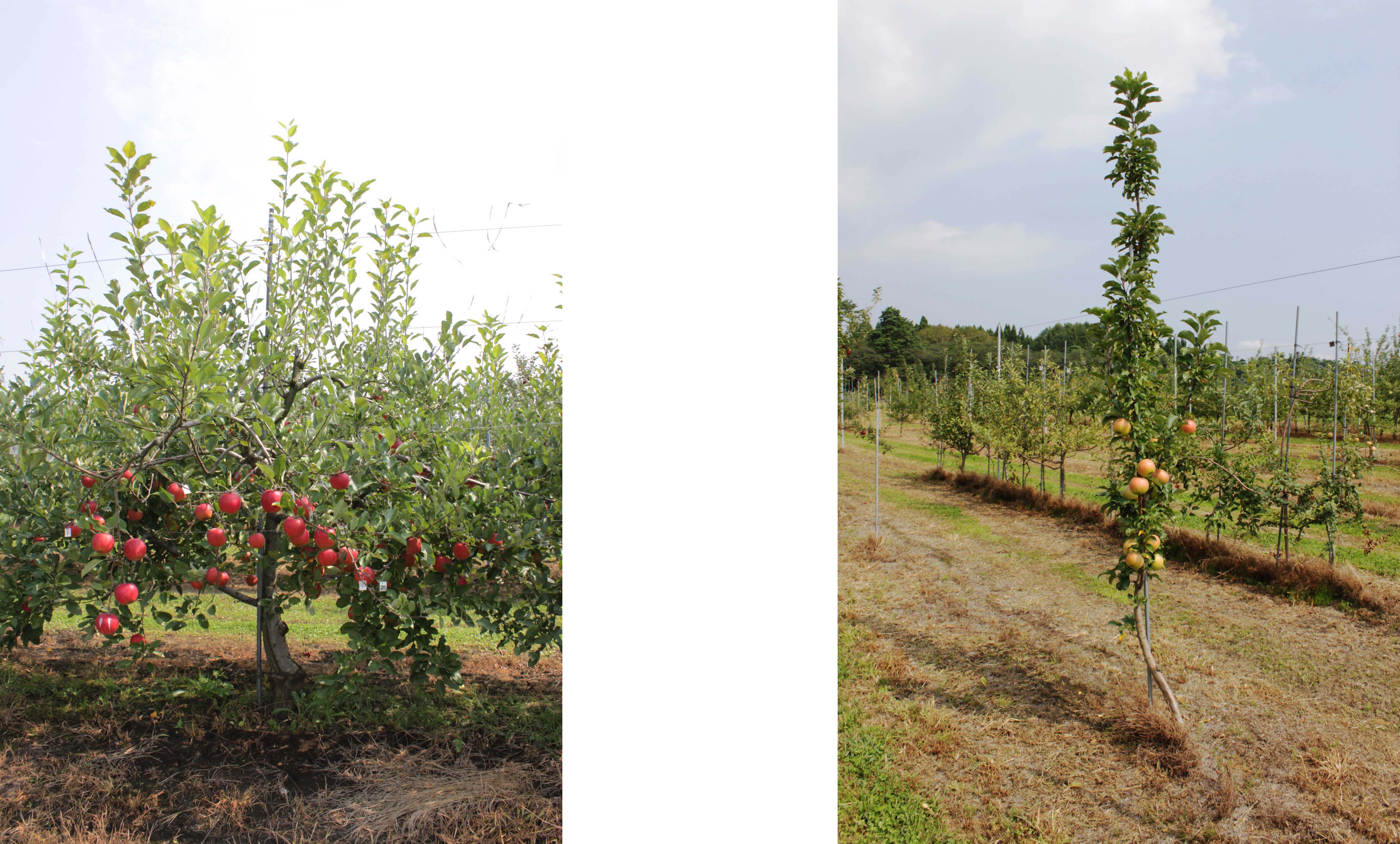
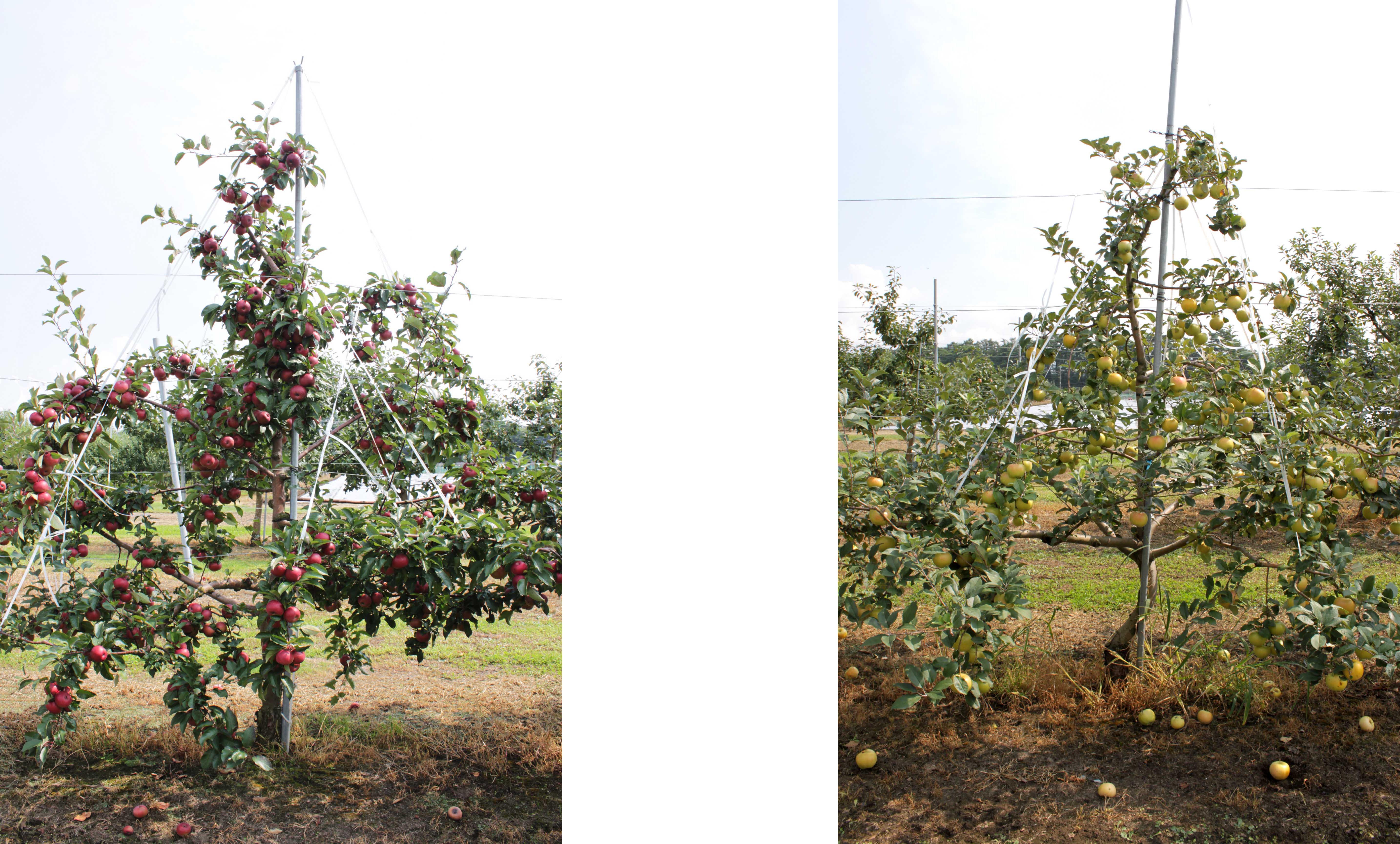
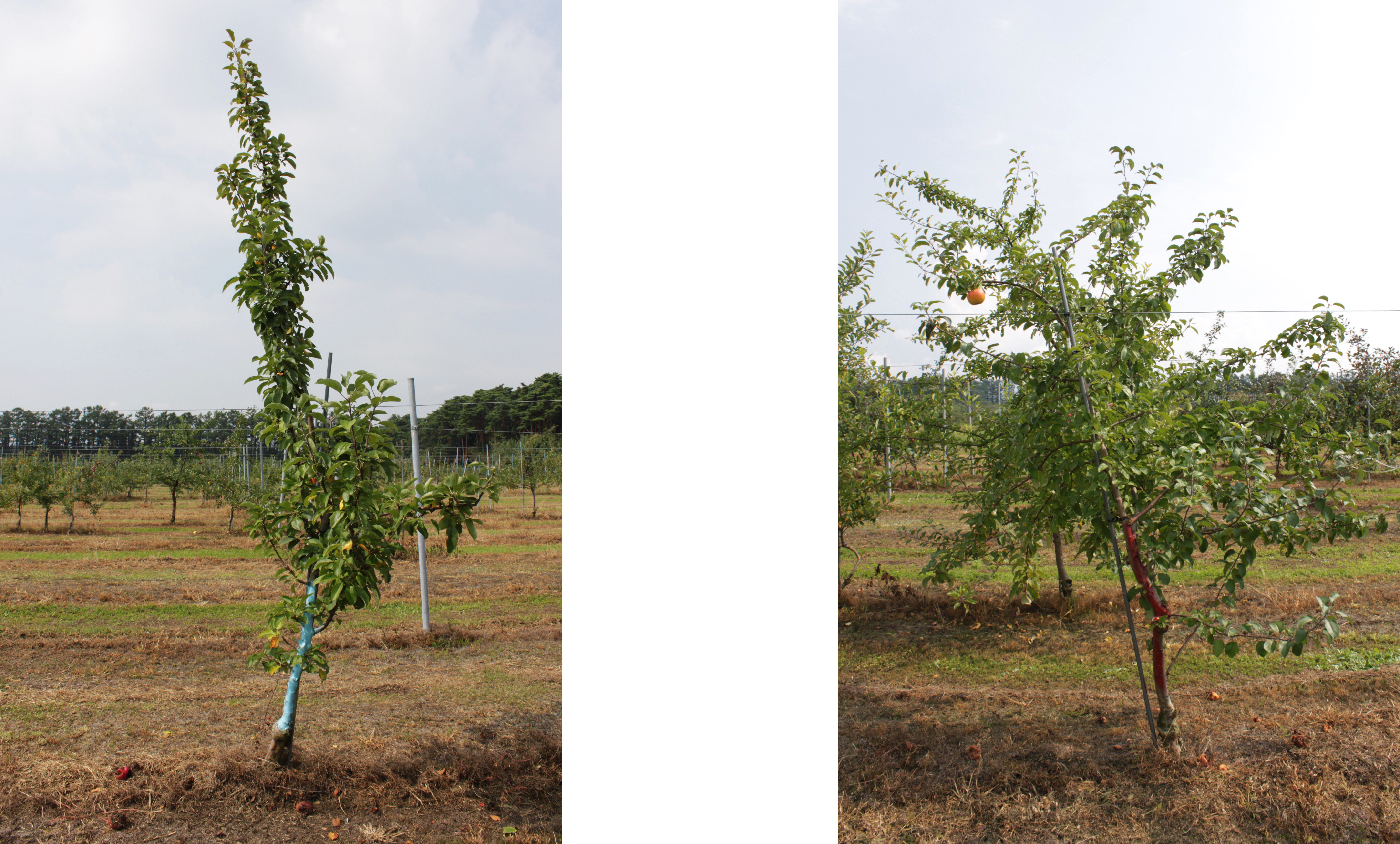
Apple trees in the Apple Research Station in NARO institute of Fruit Tree Science, Morioka, Iwate, Japan
Continue reading:
 pommedesignproject.com